
Why Children Quit Coding Classes in 3 Months (And How to Actually Fix It)
I have sat across from parents in these conversations more times than I can count. They come to me after their child has already quit somewhere…
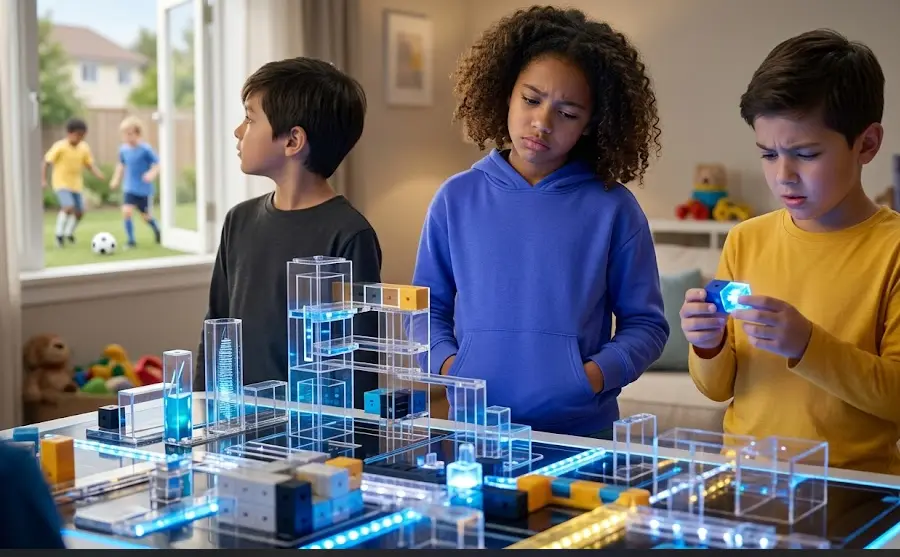
I have sat across from parents in these conversations more times than I can count.
They come to me after their child has already quit somewhere else. Sometimes two places. The story is almost always the same. They enrolled their child full of excitement. The child was keen in week one. By week six, getting them to sit down for the class was a negotiation. By week ten, the child was staring at the screen doing nothing. By week twelve, the parent quietly cancelled the subscription and told themselves their child was just not a coding person.
I want to say this clearly before anything else: your child is not the problem.
I have taught children aged 7 to 16 for years, including children who were told by previous teachers that they lacked the focus, the aptitude, or the patience for coding. Almost every one of them, given the right environment, proved that wrong. The problem is almost never the child. It is almost always the structure they were placed in.
This post is for parents who have been through that cycle and are trying to understand what actually went wrong before they try again. I am going to be honest about things the edtech industry rarely admits, because I think parents deserve a real answer, not a sales pitch.
The Three Month Cliff Is Real, and It Is Not a Coincidence
If you search online for how long children stay enrolled in coding classes, you will not find much data. Edtech companies do not publish their churn rates. But educators and learning researchers who study online enrichment programmes consistently point to a 10 to 14 week window as the highest dropout period for children in self-paced or low-accountability learning environments.
Three months is not random. It is the point at which three things converge at the same time.
The novelty wears off. The initial excitement of something new has completely faded. Whatever the child built in the first few sessions is done, and what comes next feels harder and less immediately rewarding. The dopamine of the new experience is gone, and what is left is the actual work of learning.
The curriculum gets harder. Most coding programmes start with the visual, drag-and-drop phase, which children find genuinely fun. Around week eight to twelve, the transition to text-based coding or more complex logic begins. This transition is the most fragile moment in a child’s coding education. Done badly, it feels like hitting a wall. Done well, it feels like unlocking a new level. Which one it feels like depends almost entirely on whether there is a real teacher in the room who can read the child and adjust.
Life competes. By month three, the initial parental enthusiasm has also cooled. Homework pressure increases, extracurricular schedules fill up, and a class that was non-negotiable in September becomes one of five things competing for a Tuesday evening. If the child has not built a genuine relationship with the class by this point, it is the first thing to go.
Understanding this timing matters because it tells you the problem is structural and predictable. And predictable problems have solutions.
The Real Reasons Children Quit, One by One
The child was never building anything they cared about
This is the most common reason I see, and it is the one that gets the least attention.
Most coding curricula are built around a pre-determined project sequence. The child builds what the curriculum tells them to build, in the order the curriculum decides. For some children, those projects happen to align with their interests. For the majority, they do not.
A 10 year old boy who is obsessed with cricket and Minecraft is not going to stay engaged building a generic quiz app that has nothing to do with his life. A 12 year old girl who loves art and storytelling is not going to stay excited about a logistics simulation. These are not extreme examples. They are the average child sitting in the average coding class.
When a child is building something they genuinely care about, the motivation to push through difficulty is intrinsic. When they are building something assigned to them with no connection to their interests, every difficult moment is a reason to quit rather than a reason to push through.
The question to ask about any coding programme before you enrol is not what the curriculum covers. It is who decides what the child builds.
The teacher never learned who the child actually was
In a group class of 15 children, a teacher has roughly 4 minutes of individual attention per child per hour. In a recorded course, they have zero. In a self-paced app, the teacher does not exist at all.
Four minutes is not enough to learn what motivates a child, where they are stuck, whether their silence means they understand or they have given up, or whether today is a bad day for reasons that have nothing to do with coding. Four minutes is barely enough to check a piece of work and move on.
Children do not persist through difficulty for abstract reasons. They persist because a person they trust is in the room with them, believes they can do it, and knows specifically where they are stuck. When that person does not exist, or only exists for four minutes per session, the child has nothing to hold onto when the work gets hard.
I have seen children described by previous teachers as disruptive, unable to focus, or not suited to coding, who turned out to be none of those things once someone spent real time with them. The disruption was boredom. The inability to focus was frustration at not being heard. The lack of aptitude was the result of never being taught in a way that matched how they think.
The class rewarded passive watching, not active building
Play any given recorded coding lesson and watch what the child does. In the first session, they follow along. In the third session, they follow along less carefully. By the eighth session, the video is playing and the child is doing something else on a second tab.
This is not a character failing. It is a completely predictable response to passive content. The human brain, especially the brain of a child between 7 and 14, is not designed to absorb technical information from a screen without active engagement. It needs to do, make mistakes, try again, and experience the reward of something working.
The recorded course format creates the illusion of learning. The child sits through the session. The parent sees them on the screen. The session is marked complete. But if you asked the child to rebuild what they just watched without the video playing, most could not do it. They were following instructions, not understanding.
Building requires failure, and failure requires a safe space to fail in. That space only exists when there is a teacher who can say “that is not working, let us think about why” rather than a video that just keeps playing whether the child is following or not.
The difficulty curve was invisible to the parent
Here is something I do not think parents get told often enough. The transition from Scratch block coding to Python is one of the steepest learning curves in children’s education. It feels, to a child, like the rules of the entire game have changed overnight. Yesterday, they were dragging colourful blocks around and things were happening on screen immediately. Today, they are typing text into a blank window and nothing is happening because of a missing colon on line 7.
This transition is where the majority of children who quit actually quit. Not in the first month when everything is new, and not in the final month when they have settled into a routine, but exactly at the moment when the mode of learning fundamentally changes.
Most platforms manage this transition badly because they manage it at the same pace for every child. Some children are ready for text-based coding after 8 sessions. Some need 20. In a standardised curriculum, everyone moves at the same pace, which means some children are pushed before they are ready and others are bored because they are being held back.
The transition should be invisible to the child if it is handled well. That invisibility requires a teacher who knows this particular child, watches for specific readiness signals, and introduces text-based elements gradually within projects the child already loves, not as a sudden curriculum shift.
The parent did not know there was a problem until it was too late
One more reason that almost nobody talks about: parents often have no visibility into what is actually happening inside the class until the child has already emotionally disconnected.
In most online coding programmes, the only signal a parent gets is whether the child completed the session. Not whether they understood it. Not whether they were engaged. Not whether they hit a wall three sessions ago that nobody helped them past. Just a completion tick.
By the time the child says “I don’t want to do coding anymore,” they have usually been struggling silently for weeks. The class stopped feeling productive, then stopped feeling interesting, and finally stopped feeling worth the effort. The parent’s first real data point is the refusal, which is already the end of the story.
Regular, substantive communication between teacher and parent is not a nice-to-have. It is the early warning system that prevents the three-month dropout. When a teacher tells a parent “your child seemed frustrated this week, we tried a different approach and it helped” in week 6, the parent can support the child at home, reinforce the teacher’s approach, and the child sees a team of adults working together on their behalf. That changes everything about how the child relates to the difficulty.
What the Research Actually Says
A 2024 analysis of online learning behaviour in children aged 8 to 14 found that completion rates for self-paced online courses across all subjects hover between 3 and 15 percent. Three to fifteen. The majority of children who start a self-paced course do not finish it.
Live instruction with accountability structures improves this dramatically. Studies on live tutoring show that children are 3 times more likely to complete a learning programme when a real teacher is present and parent communication is structured. Not slightly more likely. Three times.
This is not a surprising finding if you think about how children actually learn. Children are not small adults with poor time management. They are developing humans whose motivation is almost entirely relational. They do things for people they trust and for experiences that feel meaningful. A screen that plays regardless of whether they are paying attention gives them neither.
The edtech industry built its first decade on the promise that technology could replace the teacher. The data from that experiment is now in. For adults learning at their own pace, self-guided platforms work reasonably well. For children, they consistently fail to produce completion, let alone mastery.
What to Look for Before You Try Again
If your child has quit a coding class and you are considering trying again, these are the questions that will tell you whether the next attempt will be different.
Ask what your child will build in the first session. If the answer is a pre-built demo project from a curriculum deck, that is not a good sign. If the answer is “we will ask your child what they are interested in and build something connected to that,” you are talking to someone who understands motivation.
Ask how the teacher handles a child who gets stuck and goes quiet. The answer should be specific. It should describe how the teacher diagnoses confusion, what they do differently when one explanation does not land, and how they communicate with the parent afterwards.
Ask what happens when the curriculum gets harder. Specifically ask about the transition from visual to text-based coding. A teacher who has thought about this will be able to tell you exactly how they manage it for different children at different paces. A teacher who has not will give you a generic answer about the curriculum being well-designed.
Ask how you, the parent, will know if your child is struggling before they want to quit. The answer should describe a specific communication system, not a general commitment to being in touch. Weekly updates, parent-teacher meetings on request, a method for flagging when a particular session was difficult.
And finally, ask whether the teacher will remember your child in six months. This sounds like an odd question but it gets at something real. In a large group programme or a platform with rotating instructors, your child is a user. In a programme with a consistent 1:1 teacher, your child is a person someone has invested in. Children stay in things when they feel known. This is not a soft consideration. It is the mechanism by which everything else in this list either works or does not.
A Note on What Came Before This
If you are reading this after your child has already quit, I want to say something directly. A child who quit a coding class did not learn that coding is not for them. They learned that a particular class, at a particular time, in a particular format, did not work for them.
Those are completely different lessons.
Many of the children I teach now had quit somewhere else first. Some had quit twice. They came in with a story about themselves that was not true, built from an experience that was not designed for them. Rebuilding that relationship, between the child and their own sense of what they are capable of, is the most important work that happens in those first few sessions.
It is also the most satisfying work I do. The moment a child who believed they could not do this makes something work for the first time in an environment that actually supports them is not a small thing. For some children, it is genuinely the first time they have experienced learning as something that works.
That moment is available to your child. It just requires the right conditions for it to happen.
If you would like to talk about what those conditions might look like for your specific child, including children who are neurodiverse or who have had difficult previous learning experiences, you can book a free trial session with ForSyntax. The first session is a conversation as much as a class. We want to understand your child before we teach them anything.
Frequently Asked Questions
At what age do children most commonly quit coding classes?
The highest dropout rates occur in children aged 9 to 12. This age group is old enough to be placed in structured curricula but young enough that intrinsic motivation depends heavily on relationship and relevance. They are also at the age where the curriculum typically transitions from visual block coding to text-based programming, which is the most common dropout trigger. Children under 8 tend to stay engaged because everything is new. Teenagers above 13 tend to persist because they have more developed self-regulation. The 9 to 12 window is where the most care and the most personalisation is required.
Is it normal for a child to lose interest in coding after a few weeks?
It is extremely common, but it is not inevitable. Losing interest is a signal, not a verdict. It usually means one of four things: the projects are not connected to what the child cares about, the difficulty increased faster than their confidence, there is no teacher relationship giving them a reason to persist, or the format is passive rather than active. None of these are permanent conditions. All of them are fixable with a different approach.
Should I push my child to continue when they say they want to quit?
Pushing a child through a class that is structurally not working for them is unlikely to produce a different outcome. It will more often produce a stronger negative association with coding that takes longer to undo. A better response when a child wants to quit is to pause, have a genuine conversation about what specifically is not working, and use that information to decide whether the issue is the subject or the format. Most children who say they do not want to do coding anymore are really saying they do not want to do this class in this way anymore. Those are completely different things with completely different solutions.
How long should it take for a child to build something real in a coding class?
In a well-structured live programme, a child should have built something they are proud of by the end of their first session. Not a complete application, but something that works, that they made, and that they can show someone. This is not an ambitious target. It is the minimum that a good first session should achieve. A child who leaves session one having watched a teacher build something and copied steps they do not understand is not going to be motivated for session two.
What is the difference between a child who is not ready for coding and a child who had a bad experience?
In my experience, a child who is not ready for coding in any format or at any pace is genuinely rare. Almost all children respond to coding when it is connected to something they love and taught by someone who adjusts to them. The concept of a child who is simply not a coding person almost always turns out, on examination, to be a child who had a particular experience that did not fit them. Readiness is almost never the issue. Environment almost always is.
My child is neurodiverse. Is coding still a realistic option after quitting?
Coding is, in many cases, particularly well-suited to neurodiverse learners. The rules are consistent, the feedback is immediate and visual, there is no ambiguity about whether something works or does not, and the ability to build something concrete is a powerful motivator for children who struggle with abstract learning goals. The reason neurodiverse children quit coding at higher rates than average is not because coding does not suit them. It is because most coding programmes are not designed for them. A 1:1 live session with a teacher who understands neurodiverse learning, who adjusts pacing and communication style, and who builds on the child’s specific interests rather than a standard curriculum, produces dramatically different outcomes.
How do I know if the next coding class will be different from the last one?
Ask the teacher to describe a session with a child who got frustrated and wanted to stop. Listen for whether the answer is specific and draws on real experience, or generic and describes what they would do in theory. Ask what your child will build in session one. Ask how you will know if your child is struggling before they reach the point of wanting to quit. The answers to these three questions will tell you more about whether a programme will work for your child than any marketing material, curriculum description, or trial offer.
