
What Happens in a ForSyntax Free Trial Session? (A Parent’s Complete Guide)
Your child has never written a line of code. Or maybe they have tried one of those apps that taught them nothing beyond dragging blocks. Either…
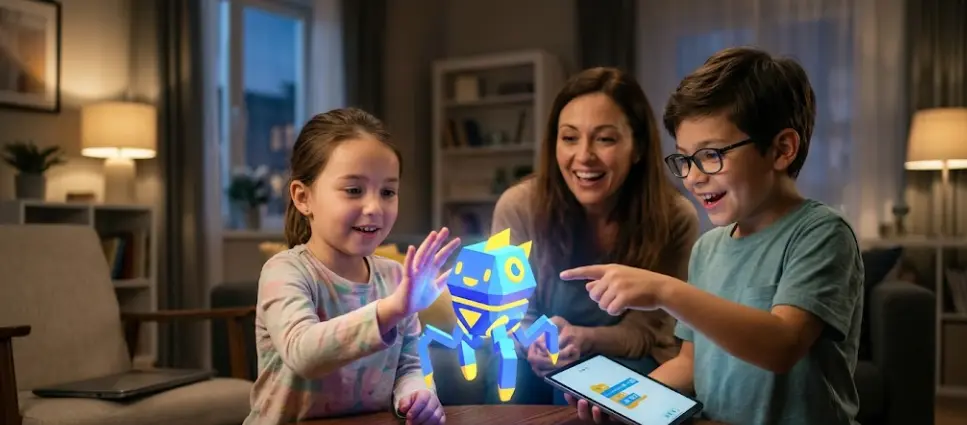
Your child has never written a line of code. Or maybe they have tried one of those apps that taught them nothing beyond dragging blocks. Either way, you are sitting here wondering whether a live online class is worth your child’s time and attention before you commit to anything.
That question is exactly why we created the ForSyntax free trial. No payment. No pressure. No homework before arriving. Just your child, a real teacher, and sixty minutes that most families describe as the fastest hour they have had in a long time.
This post walks you through everything that happens inside a ForSyntax free trial session so you know exactly what to expect before you book.
Before the Session Even Starts
When you book a free trial, you receive a WhatsApp confirmation from the ForSyntax team within two hours. That message includes the session time, the teacher’s name, and a simple link your child clicks to join. No app to download. No account to create. The session opens in the browser your child already uses every day.
You will also receive one short message asking two things: your child’s age and what they are most interested in. Not a long form. Not a questionnaire. Two questions, because that is all a good teacher needs to prepare a session that feels like it was designed specifically for your child and nobody else.
The First Five to Ten Minutes: Hello, Not a Test
The session opens and the first thing that happens is not a lesson. It is a conversation.
The teacher introduces themselves and asks your child a few simple questions. What games do they play? What is their favourite subject in school? Have they ever tried to build anything, digital or physical? Do they have a favourite movie, show, or character?
This is not small talk. An experienced ForSyntax teacher is listening for two things simultaneously. First, they are finding the creative hook, which is the specific interest that will make the technical work feel exciting rather than like a chore. A child who loves Minecraft responds differently from a child who loves drawing, and a teacher who knows this in the first ten minutes can build the entire session around it. Second, they are gently assessing how the child communicates, whether they are naturally quiet or expressive, whether they need encouragement or just space, whether they engage better with questions or demonstrations.
None of this feels like an assessment to the child. It feels like someone who is actually interested in them. That distinction matters more than any curriculum decision made before the session.
A Brief Introduction to the Course: Real, Not Overwhelming
After the initial conversation, the teacher spends five to seven minutes giving the child a picture of what they will learn and, more importantly, what they will build.
This is not a syllabus walkthrough. It is closer to showing a child a finished meal before teaching them to cook. If the child is trying the coding course, the teacher shows them a real game a ForSyntax student built. If they are exploring the Gen AI course, they see a real tool a student created. If it is robotics, they see a real robot a child their age assembled and programmed. Seeing the destination matters because it answers the question every child has but rarely says out loud: why am I doing this?
The teacher also gives a brief, honest picture of the journey. Not a guarantee, not a sales pitch. Something like: by month one, you will have built your first working project. By month three, you will be able to show your friends something you made from scratch. This kind of timeline is concrete enough to be motivating and honest enough to be trusted.
Building Something: The Part Parents Do Not Expect
This is the part that surprises most families.
Inside a sixty-minute trial, your child actually builds something. It is small, it is simple, and it is designed to be finished within the session. But it works. A basic Scratch game that responds to keyboard controls. A short Python script that asks questions and gives answers. A simple Gen AI prompt that does something useful. A small robotics sequence that makes something move.
The reason ForSyntax does this in a trial session rather than saving it for week one of a paid course is straightforward. Reading about coding and building with code are completely different experiences. A child who has read about it can decide to stop. A child who has made something that works on their own screen, in their own session, with their name on it, experiences something that is very difficult to walk away from. That feeling of making something from nothing is the real product, and we want your child to feel it before you make any decision.
The teacher guides the build in real time, sharing their screen, watching the child work, and stepping in precisely when needed. Not before. A good coding teacher knows that a child working through a problem is learning faster than a child watching a solution being demonstrated. The guidance is calibrated so the child feels capable, not coached.
Assessing Capability: What the Teacher Is Actually Learning About Your Child
While all of this is happening, the teacher is building a picture of your child that no application form or placement test could produce.
They notice how the child responds when something does not work as expected. Some children immediately ask for help. Others try three different solutions before asking. Others go quiet and need a nudge. None of these responses is better or worse. Each one tells the teacher how to pace future sessions, when to let the child sit with a challenge and when to intervene, and what kind of encouragement lands best.
They notice attention span and how it shifts with different types of tasks. They notice whether the child engages with the visual output of what they are building or with the logic behind it. They notice confidence levels and where they drop.
By the end of the session, the teacher has a genuine, specific read on your child as a learner, which no algorithm, no assessment quiz, and no recorded course can replicate. This is what live 1:1 makes possible and what every other format misses.
The Teacher and Parent Interaction: Five Minutes That Change the Conversation
Near the end of the session, the teacher invites the parent into the conversation. If you have been watching quietly, this is your moment. If you stepped away, the teacher will give you a brief, specific summary that is nothing like a school report.
They will tell you what they noticed. Not “your child did well” but something like: “She worked through the logic of the loop entirely on her own, which tells me she has strong sequential thinking. She got quieter when I introduced a new concept quickly, which means we will pace new ideas more gradually and build on each one before moving forward.”
They will answer any question you have about the course, the structure, the platform, or the teacher’s approach. And they will tell you, honestly, whether they think the timing and the course are right for your child. If a different course would suit your child better, they will say so. If your child might benefit from starting in a month rather than now, they will say that too. The goal of this conversation is to give you genuine clarity, not to close a sale.
After the Session: What Happens Next
The session ends and your child typically has one of two reactions. Either they want to know when the next session is, or they want to carry on building immediately on their own. Both are good signs.
Within a few hours of the session, you receive a message from the ForSyntax team summarising what was covered, what the teacher observed about your child’s learning style, and what a typical first month would look like if you choose to continue. There is no time pressure attached to this message. There is no countdown offer, no expiring discount. The information is useful regardless of what you decide next.
If you have questions, you speak to a person. Not a chatbot. Not an automated sequence. A member of the ForSyntax team who knows which teacher your child worked with and can speak specifically to what happened in the session.
Which Courses Offer a Free Trial?
Every ForSyntax course offers a free trial session in the same format described above. The teacher and the specific project change based on the course, but the structure is identical.
The six courses available for a free trial are Coding, where children progress from Scratch to Python and build real applications. Gen AI, where children learn to understand and work with artificial intelligence tools. Robotics, where children build and programme physical and virtual robots. Game Development, where children design and build working games from scratch. Math, where coding is used as the tool for developing genuine mathematical fluency. And AI Automation, designed for older children who want to understand how automation tools are reshaping every industry they will eventually work in.
If your child has a special educational need or is neurodiverse, the ForSyntax Inclusive programme runs in exactly the same free trial format but with a teacher specifically experienced in working with neurodiverse learners. The first session looks different from the outside because the pacing, the tools, and the communication approach are adapted. The outcome is the same: your child builds something, and you have a genuine conversation with a teacher who understands your child’s specific learning profile.
Why We Do Not Charge for the Trial
The honest answer is this. A description of ForSyntax, however detailed, cannot replace the experience of watching your child in a session. We are asking you to give us an hour of your child’s time and your attention. That is already something. Asking for payment on top of that, before you have seen anything, is not how trust is built.
The free trial costs us a real teacher’s time and preparation. We think that is a fair investment to make in every family who is genuinely considering whether ForSyntax is right for their child. If it is not the right fit, we would rather you know that in the trial than after payment.
FAQ
How long is the free trial session?
The free trial runs between 30 and 60 minutes depending on the child’s engagement and pace. The teacher will not cut the session short if the child is building and engaged. Most sessions naturally reach the full hour.
How long is the free trial session?
The free trial runs between 30 and 60 minutes depending on the child’s engagement and pace. The teacher will not cut the session short if the child is building and engaged. Most sessions naturally reach the full hour.
Does my child need any prior coding experience to join the trial?
No. The trial is designed to work for complete beginners as well as children who have tried coding before. The teacher assesses where the child is in the first ten minutes and adjusts the session accordingly.
Do I need to be present during the session?
You are welcome to watch the entire session. Many parents sit beside their child and find it genuinely interesting. Some step away and return for the parent conversation at the end. Either works. The teacher will invite you into the conversation toward the close of the session regardless.
What does my child need to have ready?
A laptop or desktop computer with a stable internet connection and a working camera and microphone. A tablet can work for some courses but a laptop is preferred. No software installation is required. The session runs in the browser.
Is the free trial available for children with special educational needs?
Yes. The ForSyntax Inclusive programme offers a free trial in the same format, with a teacher experienced in working with neurodiverse learners including children with autism, ADHD, dyslexia, and other learning differences. Please mention this when booking so we can assign the right teacher.
What happens if my child does not enjoy the session?
That information is genuinely useful and we will tell you what we think happened. Sometimes a different course is a better fit. Sometimes the timing is off and a child needs a few more months. We will give you an honest answer rather than a retry pitch.
How do I book the free trial?
Click the button on the ForSyntax homepage that says Book a Free Live Session. Choose a time that works for your child and fill in two fields: your child’s age and their main interest. That is the entire process.
Is the trial available for children in UAE and UK?
Yes. ForSyntax sessions are live online and available globally. UAE and UK families book the same way as India-based families. The teacher is briefed on your child’s location and any relevant context before the session.
After the trial, is there any obligation to enrol?
None. You will receive a summary message from the team and an honest conversation is always available if you want one. The decision is entirely yours and there is no pressure or follow-up sales sequence attached.
Can parents ask the teacher questions during the session?
Yes, and we encourage it. The last five to ten minutes of every trial session are reserved for the teacher and parent to speak directly. Any question about the course, the teaching approach, your child’s specific needs, or what the first month would look like is welcome.
