
How to Choose a Coding Class for Your Child: A Teacher’s Honest Guide
I have been teaching children to code for several years. I have sat across from hundreds of families in parent consultations, in live sessions, in the…
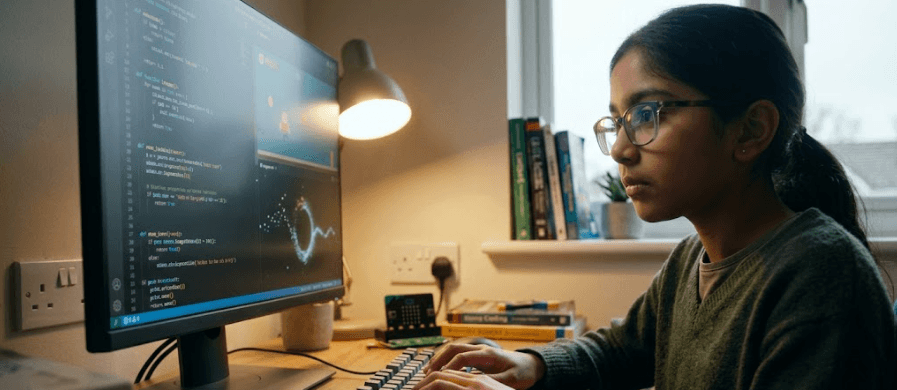
I have been teaching children to code for several years. I have sat across from hundreds of families in parent consultations, in live sessions, in the middle of a child’s breakthrough moment when something they built finally worked the way they imagined it would. And I have also sat across from parents who came to me after spending months and real money on a coding class that simply did not work for their child.
The conversation is always the same. They chose based on a polished website, a low introductory price, or a name they recognised. None of those things predicted whether their child would stay engaged, build something meaningful, or grow in confidence. The things that actually mattered were quieter and harder to see from the outside.
This post is my honest attempt to give you those quieter things. The questions nobody told you to ask. The signs that a coding class will work for your specific child, not just for a hypothetical average learner. And the things I would tell my own family if they asked me what to look for.
Start With Your Child, Not the Syllabus
The first mistake most parents make is starting with the course. They search for “best coding class for kids UK,” read a list of languages and certifications, and choose based on curriculum content. I understand why. It feels like the responsible, thorough approach.
But here is what I have learned after years of teaching: the curriculum matters far less than the match between the teaching method and how your specific child learns.
A child who is naturally curious and self-directed will thrive in almost any structured environment. A child who needs frequent encouragement, who loses confidence the moment they get something wrong, who needs a human relationship to stay motivated that child needs something very specific. And most coding classes, however well-designed their syllabus, are not built for them.
Before you look at a single provider, sit with your child for ten minutes and notice three things. How do they respond when something does not work the way they expected? Do they try again, or do they shut down? How do they feel about asking for help embarrassed, comfortable, or somewhere in between? And what do they most enjoy building or making, in any context, not just on a screen?
Your answers to those three questions will tell you more about what kind of coding class will work than any parent review or course description.
The Live vs Recorded Question And Why It Matters More Than You Think
Most parents know, at least vaguely, that coding classes come in two forms: live sessions with a real teacher, and recorded or self-paced courses where the child works through content independently. What most parents do not know is how dramatically different the outcomes are between these two formats, and why.
I am going to be direct here because I think parents deserve honesty rather than marketing language. Recorded courses work beautifully for children who are already self-motivated, who can read and follow instructions comfortably, and who will continue even when they get stuck without someone there to help them through it. For those children, a recorded course is a genuinely good option and often more affordable.
For most children under thirteen, recorded courses produce one consistent outcome: abandonment. Not because the child is not capable, and not because the course is poorly made. Because learning to code involves hitting walls moments where something does not work, where the logic breaks, where the child cannot see what they did wrong. In those moments, a video does not know the child is stuck. It keeps playing. And the child either skips forward without understanding, or they close the laptop and do not come back.
A live teacher notices. A live teacher asks the right question. A live teacher says “actually, let me show you something try changing just this one part” and watches the child’s face change when it works.
When you are choosing a coding class for your child, ask the provider directly: is there a real teacher in every session? Not a support chat, not a community forum, not an AI assistant. A human being who is looking at your child’s screen and responding in real time.
If the answer is no, that is important information. It does not automatically disqualify the course, but it should change your expectations of what your child will need from you to stay on track.
The Seven Questions I Would Ask Every Provider
I have reviewed a lot of coding programmes over the years, as an educator and as someone who cares deeply about whether children actually learn rather than simply attend. These are the seven questions I would ask any provider before making a decision.
First: What will my child have built by the end of the first month?
This is the most revealing question you can ask, and providers who cannot answer it specifically are telling you something important. A good coding class produces visible, tangible outputs a working game, a simple app, an animated story, a robot that does something the child designed. If the answer is “they will have learned the basics of Python syntax” or “they will understand how loops work,” that is a course built around knowledge transfer, not creation. Those are not the same thing. Children stay motivated when they can show someone what they made. Abstract knowledge does not do that.
Second: What happens when my child gets stuck and wants to quit?
Every child hits this point. It usually comes around weeks three to five, when the initial excitement has faded and the challenge has increased. How a coding class handles this moment determines whether your child builds resilience or learns that it is acceptable to walk away when things get hard. Ask the provider: do you have a protocol for this? Does the teacher adapt the project difficulty? Is there a parent communication at this point?
Third: How much of the session is the teacher talking versus the child doing?
The best sessions I have run are the ones where I talk for less than 20 percent of the time. The child’s hands are on the keyboard, they are making decisions, they are trying things and seeing immediate results. A session where the teacher demonstrates for forty minutes and the child watches is not a coding class. It is a coding lecture. There is a significant difference.
Fourth: Can I sit in and observe a session before committing?
Any provider who says no to this is not confident in their delivery. The best providers welcome parents to observe, because they know that what happens in a session is the strongest possible advertisement for what they do. If you are told that observation is not possible for reasons of child privacy that is a legitimate concern for group classes, but for a 1:1 session with your own child, there is no valid reason to exclude you.
Fifth: What is the rescheduling policy?
This is a practical question that affects real life more than parents expect. Children get sick. School trips happen. Family plans change. A coding class with a rigid cancellation policy that forfeits sessions when you give 24 hours notice is going to create stress and financial waste within two months of enrollment. Ask for the policy in writing before you sign up for anything.
Sixth: How do you communicate with parents between sessions?
The best coding education is a three-way relationship between the child, the teacher, and the parent. If the teacher is not communicating regularly with you about what your child built this week, where they struggled, and what you can do to support them at home, you are being kept at a distance from your own child’s learning. You should know, at minimum, what your child made in each session and one thing they found difficult.
Seventh: Do you have experience with children who have additional learning needs?
I ask every parent this question at ForSyntax even when they have not mentioned it, because the answer reveals something important about a child regardless of whether they have a formal diagnosis. Many children who struggle in traditional educational environments respond differently to coding the clear structure, the immediate visual feedback, the absence of social pressure, the ability to try and fail without anyone watching. If a provider has experience with neurodiverse learners, they understand differentiated pacing and they will adapt their teaching to your child rather than expecting your child to adapt to their curriculum.
What to Look For in a Trial Session
Most reputable coding class providers offer a free trial session. This is your best source of information, and it is worth going into it with specific things to observe rather than a general impression.
Watch your child’s body language during the first ten minutes. Are they leaning forward or leaning back? Leaning forward, even slightly, is an engagement signal. Leaning back is disengagement. Children are honest with their bodies in ways they are not always honest with their words.
Notice whether the teacher asks your child what they are interested in, or whether they begin the session from a fixed starting point regardless of who is in front of them. The best teachers I know spend the first five minutes of a first session doing nothing but finding out what the child cares about what games they play, what they wish they could build, whether they prefer making things move or making things solve problems. That information shapes the entire session.
Pay attention to how the teacher responds when your child gets something wrong. Not what they say how they respond. Do they pause, or do they rush to correct? Do they ask the child what they think happened, or do they explain immediately? A teacher who lets a child sit with a mistake for thirty seconds and figure out part of it themselves is doing something very valuable. It is slower in the moment and it is worth significantly more over time.
And at the end of the trial, ask your child one question: did you build something today? Not did you learn something. Did you build something. If the answer is yes and especially if they want to show you what it is that session worked.
A Note on Pricing and What It Does and Does Not Tell You
The pricing range for online coding classes for children in the UK varies considerably. Group classes typically run from around £15 to £35 per session. Live 1:1 sessions run from around £40 to £80 per hour depending on the provider. There are also low-cost subscription platforms and free resources like Scratch and Code.org for parents who want to explore independently.
Price is not a reliable indicator of quality in either direction. I have seen expensive programmes deliver mediocre outcomes and affordable programmes deliver excellent ones. What price does reliably indicate is the teacher-to-student ratio, and that matters. A session at £20 is almost certainly group or pre-recorded. A session at £60 is almost certainly 1:1 live. Whether that difference in price is worth it to your family depends entirely on your child specifically on whether they need individual attention to stay engaged, which most children under twelve do.
One thing I would caution parents about is introductory pricing that does not reflect the ongoing cost. A first month at a heavily discounted rate is a marketing tactic, not an indicator of the programme’s ongoing value or affordability. Always ask what the standard monthly rate is before the trial period ends, and calculate whether that rate is sustainable for your family for the six to twelve months a meaningful coding education requires.
If Your Child Has Additional Learning Needs
I want to spend a moment on this specifically because I have worked with many families in this situation and the information available to them is genuinely insufficient.
Children with autism, ADHD, dyslexia, sensory processing differences, and other additional learning needs can and do thrive in coding education. In some cases, they thrive more than neurotypical peers, because the structure, logic, and immediate feedback of coding maps directly onto cognitive strengths that these children often have in abundance. The challenge is not whether your child can do this. The challenge is finding a provider who understands how to teach them.
The things that matter most for neurodiverse learners in a coding context are these. Session length should be matched to the child’s attention span, not the provider’s schedule. A fifty-minute session is not the right format for every child, and a good provider will adapt this. Visual output should come as early in the session as possible within the first ten minutes if achievable because the relationship between action and visible result is what keeps many neurodiverse learners in the room. Transitions within a session should be signalled and predictable, not sudden. And the teacher should never respond to a mistake with any language that implies the child did something wrong only language that frames the mistake as information.
When you are evaluating a provider for a neurodiverse child, ask them specifically: have you taught children with my child’s profile before, and what did you adapt? A provider who has a genuine answer to that question, with specific examples, is a provider worth trusting. A provider who tells you their programme works for all children without adaptation is a provider who has not thought carefully enough about the question.
Making Your Decision
By the time you have done all of this observed your child, asked the seven questions, attended a trial session, and checked the pricing and rescheduling terms you should have a clear sense of fit. Trust that sense.
The best coding class for your child is not the one with the most impressive website or the longest list of languages taught or the most recognisable name. It is the one where your child leans forward, where the teacher notices who is sitting in front of them, and where your child walks away from the first session wanting to show you what they made.
That is the benchmark. Everything else is secondary.
If you would like to see what a ForSyntax free trial session looks like for your child, including our inclusive 1:1 sessions for neurodiverse learners, you can book a session with no obligation. We will spend the first session finding out exactly what your child wants to build and then we will help them start building it.
Frequently Asked Questions
What age should my child start a coding class?
Most children are ready for structured coding education from age six or seven, though the format matters as much as the age. Children under eight typically do best with visual, block-based coding environments like Scratch rather than text-based languages. There is no upper age limit for beginning a twelve-year-old starting from scratch is not behind, they are simply starting, and they will progress more quickly than a younger beginner because their logical reasoning is more developed.
Is a 1:1 coding class worth the higher price compared to a group class?
For most children under twelve, yes. The primary reason is not pace it is engagement. In a group class, a shy child can sit passively and appear to be participating without actually engaging. In a 1:1 session, there is nowhere to hide, and that accountability is positive. The teacher also adapts in real time to what the child needs in that session, not what the curriculum says should happen next. Whether the price difference is sustainable for your family is a separate question, and an honest provider will acknowledge that group classes are a reasonable alternative for self-motivated learners.
My child plays a lot of video games. Will coding class help or distract them further?
This is one of the most common questions I receive, and my honest answer is that gaming and coding are closer than most parents realise. Children who love games have already developed strong intuitions about logic, cause and effect, problem solving, and creative system design. These are coding fundamentals. The transition from playing games to building them is often remarkably natural for children who are deeply engaged with gaming, and it tends to redirect their enthusiasm rather than compete with it.
What if my child loses interest after a few weeks?
This happens, and it is worth distinguishing between two different things. A child who loses interest because the work has become too difficult is not disengaged they are struggling, and the solution is adapting the challenge level, not stopping. A child who loses interest because the sessions feel repetitive or disconnected from what they care about is giving useful feedback about the teaching approach, not about their capacity for coding. If your child is losing interest, have an honest conversation with the teacher before you interpret it as a signal to stop.
How long before my child can build something real?
In a well-structured live 1:1 programme, a child should be building something simple but genuinely functional within their first session. Not a complete product but something that runs, responds, or moves. By the end of month one, a child aged eight to twelve should have a working Scratch game or simple interactive story they could share with a friend. By month three, they should have something they are proud of rather than simply finished. If a programme cannot show you examples of what children at your child’s stage have built, ask why not.
Do coding classes help with school subjects like maths?
They can, though the connection is indirect rather than direct. Coding builds the underlying skills that support mathematical thinking pattern recognition, logical sequencing, breaking a problem into smaller steps, tolerating ambiguity while working toward a solution. Children who code regularly often find that their relationship with problem-solving in general improves, and maths benefits from that shift. It is not a substitute for maths support if your child needs it, but it is a meaningful complement.
Is online coding education as good as in-person?
In my experience, yes and in some ways better. Online 1:1 sessions remove the need for travel, allow the child to learn in an environment where they are comfortable, make screen-sharing natural and immediate, and give the teacher a direct view of exactly what the child is doing in real time. The argument for in-person typically comes down to the social dimension, which matters more for group classes than for 1:1. For a child working with a dedicated teacher in a live online session, the learning quality is equivalent to in-person and the accessibility is considerably higher.
What is the difference between ForSyntax Alpha and Beta plans?
The Alpha plan is our 1:1 live session format one child, one teacher, fully personalised. The Beta plan is a small group of two to three children, offering a slightly more affordable option while maintaining the live, project-based structure. For neurodiverse learners and younger children, we recommend Alpha. For older children who are confident learners and would benefit from a small peer community, Beta is a strong option. We are happy to discuss which is the better fit for your child during your free trial.
